

Asked for Bread, Given Stones
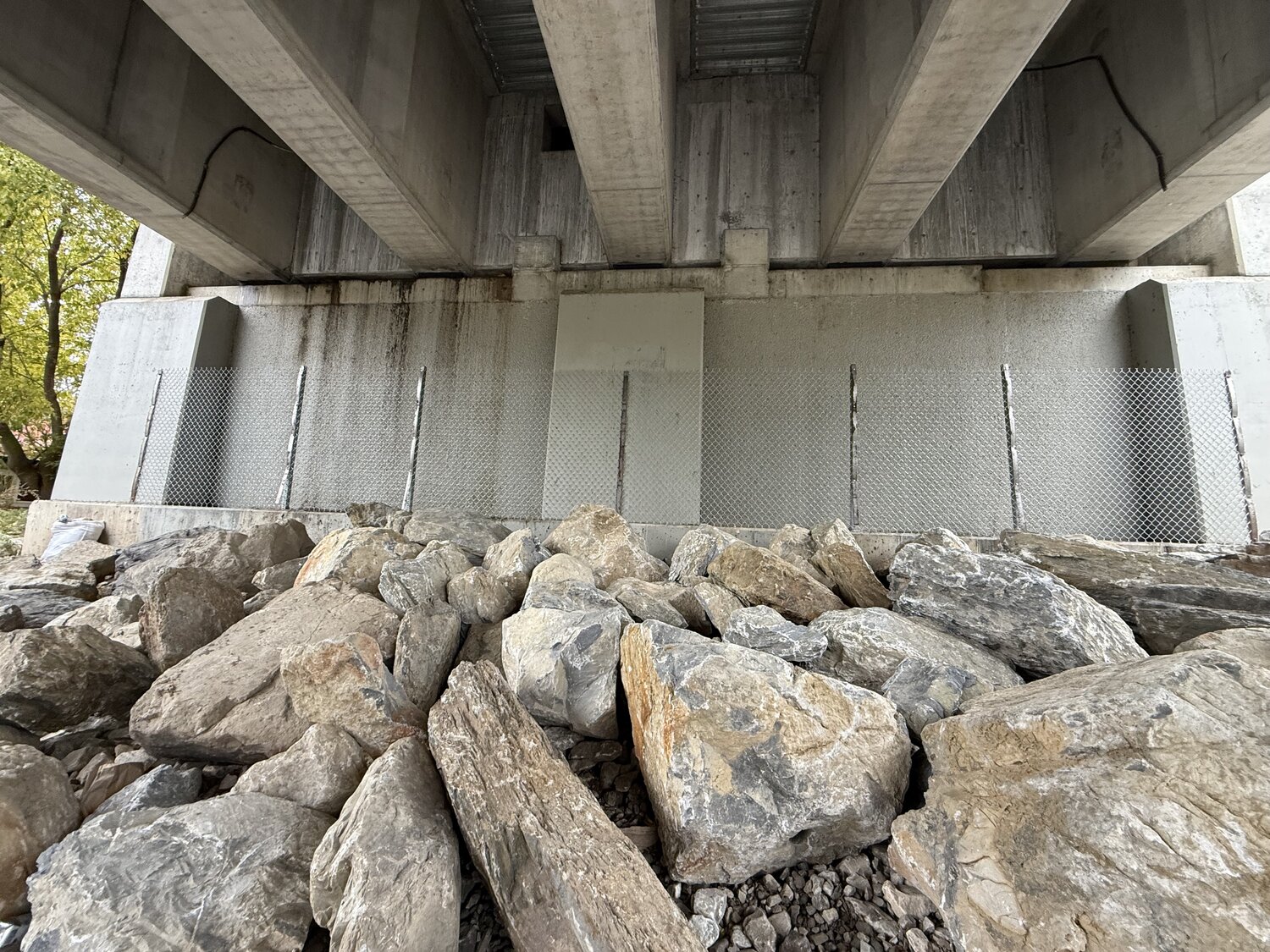
On October 25, VTDigger reported on what it called “anti-homelessness landscaping” in Middlebury. You can read the story here. This summer, town staff covered the ground under the Cross Street Bridge with large, uneven rocks where tents once stood. They chain-linked off an area where people used to rest and talk with one another.
The story frames the decision as “a difficult balance between the competing needs of its constituents.” Local service providers agreed the town faced “a tricky situation.” Selectboard Chair Andy Hooper called whether he agrees with the decision a “very tough question.”
Tough for whom?
Green Mountain Justice has spent hundreds of hours under that bridge with the neighbors who slept there. What we have seen there, and what the data show, tell a different story than the one Middlebury is telling itself.
Who the story asked
The story begins in the right place. Reporter Theo Wells-Spackman opens with Josh Simon, who once rested under the bridge. Simon describes what the spot meant to people outdoors who wanted some company, and the blue herons along the water. He is the one marginalized neighbor in the piece. He has since found a new place to stay.
From there, the story follows a familiar pattern. Like most accounts of the lives of Vermont’s marginalized and disenfranchised neighbors, it flattens the reality of life outside. The other seven voices belong to people enfranchised in the systems that decide what happens to our neighbors, or that are ostensibly responsible for their care. The town manager explained the town’s reasoning. The owner of the restaurant next to the bridge said customers were disturbed, and he wished the town had acted sooner. The selectboard chair called the rocks effective. To the story’s credit, a shelter director, a nonprofit leader, a state representative, and a street outreach worker raised hard questions. But the story does not quote anyone who sleeps outside in Middlebury today.
When the answers come from the people who manage a problem, the problem gets described in their terms. Town Manager Mark Pruhenski called it “a revolving door of tents coming in.” The question becomes how to stop the door. The people coming through it disappear from view.
This response seeks to add texture to that picture, so we can consider what we are actually doing to our neighbors.
What the rocks do
This is not about crime. If a neighbor breaks the law, public safety requires that neighbor be held accountable and removed from spaces where harm could follow. Hold the person responsible. The rocks do something else. They cannot tell the person who damaged a car from the person who sat by the water watching the herons. Josh Simon put it plainly: “Problems are caused, and then everybody gets booted.” The rocks punish a condition, not an act.
The town already had a process. The bridge was a prohibited location under its encampment policy, and removal under that policy takes notice, staff time, and police hours. Pruhenski said that process was slow and costly. So the town replaced it with stone. A policy with steps became a pile of rock with none.
Where were people supposed to go?
The story’s own reporting answers that question. Susan Whitmore directs the John Graham Shelter in Vergennes. She said her shelter holds nine households and has 23 on its waitlist. Charter House in Middlebury holds 25 people and has 47 waiting. Jeanne Montross, who leads Helping Overcome Poverty’s Effects in Middlebury, asked what we are asking: where are people supposed to go?
There are no open shelter beds. There is no longer room under the bridge. The only place left is out of town or out of sight.
The view from under the bridge
We have never met one person under that bridge who wants to live that way. We have seen what it costs them to be seen. The bridge sits beside a restaurant. Neighbors ate, slept, and tried to keep some dignity under the dehumanizing, embarrassing gaze of diners a few yards away.
Our neighbors knew Middlebury did not want to see them. So they tried to stay out of sight, tucking their tents behind the bridge’s abutment. The ground there was already covered with smaller rocks. To dull the pain, they layered cardboard under their tents and sleeping bags. Then the town brought in boulders.
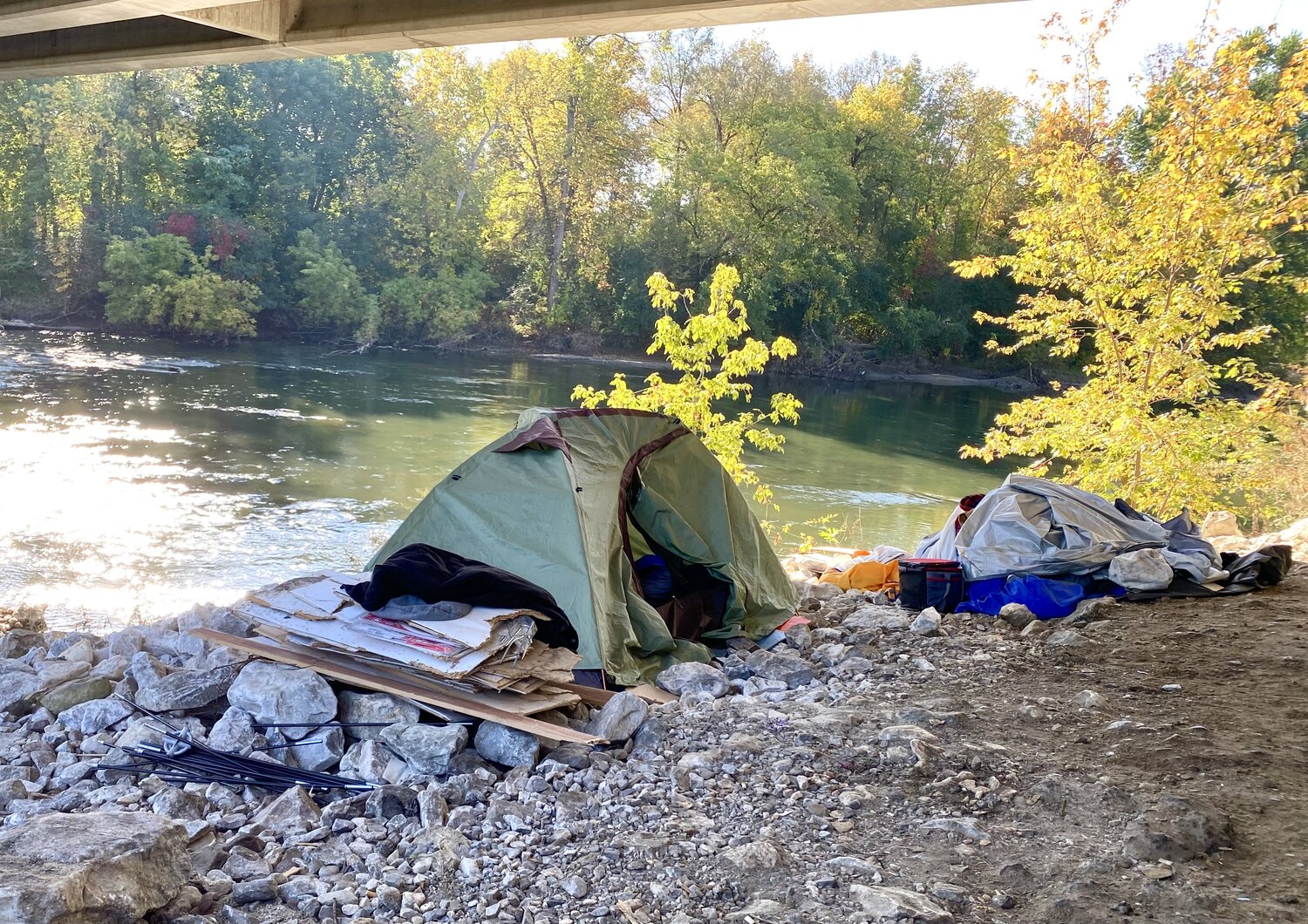
For our neighbors who lived under the bridge, Middlebury does not look like a town in a tricky situation. It looks like a picturesque New England college oasis in an otherwise rural, working-class part of Vermont. Most of the unsheltered neighbors we meet in town come from those surrounding communities. The selectboard chair worried about drawing people to the area from elsewhere. These neighbors did not drift in. They are Vermont’s own.
The town gave notice and offered referrals. Notice and referrals are not relationship. We know them.
We met Matt and Elizabeth Hunt under that bridge more than two years before they found a home. They have been together 38 years and raised two sons. They lived in their car and camped outside through Vermont winters, and Matt cared for Elizabeth through all of it. A year ago this month, with our partners at Pathways Vermont, they moved into their own apartment. It did not come from the system working as intended. Matt said it best: “Makes you feel like there’s actually love still out there in the world.” You can hear their story on our podcast, Voices From the Edge, here.
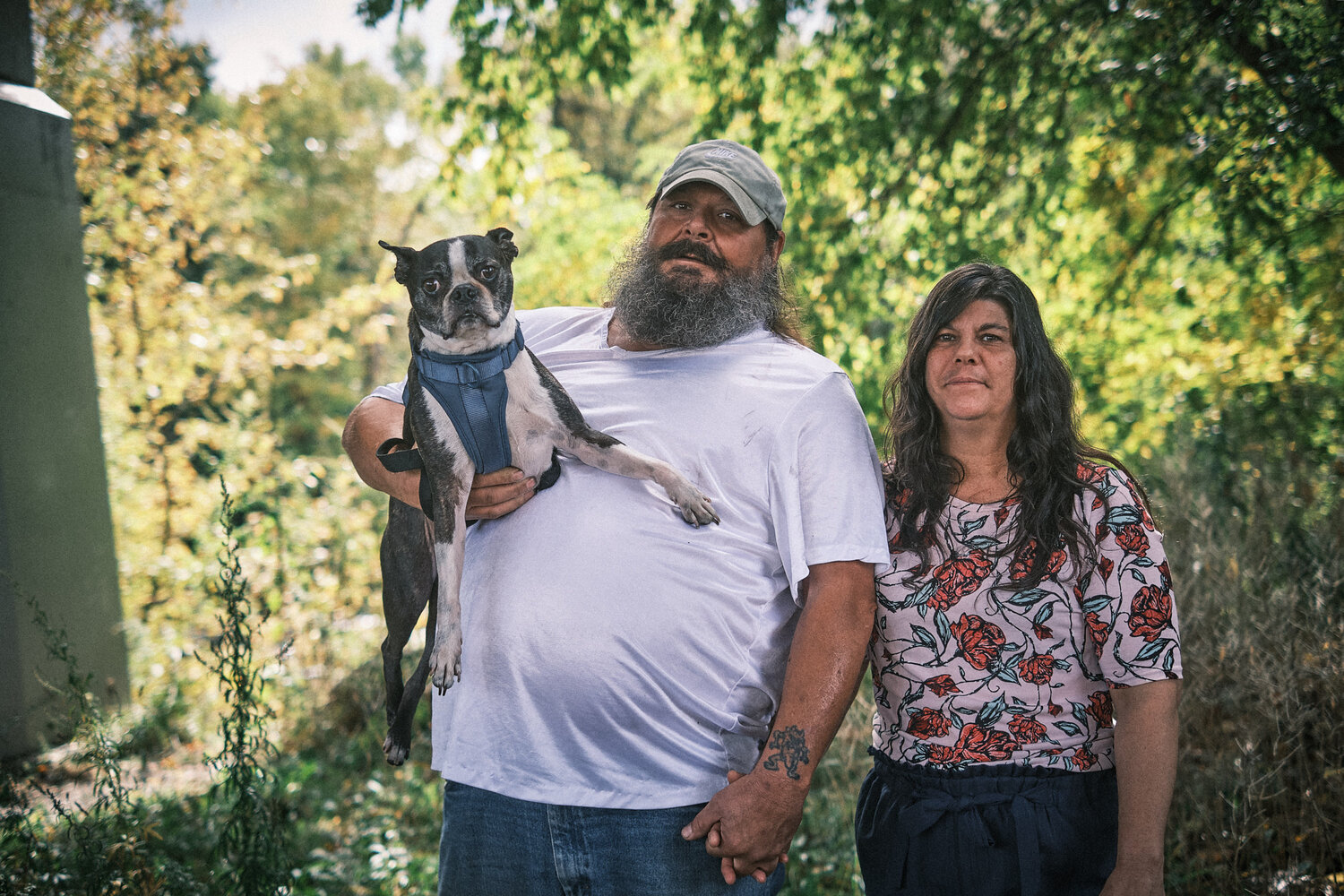
Matt and Elizabeth are just two of the dozens of neighbors we have met under that bridge. Each one has a story. Each one is someone’s son or daughter, granddad or sister.
What the data say
Step back from the bridge and look at Vermont. We have more nonprofits per person than almost any state in the nation. Our budget is larger than New Hampshire’s, though New Hampshire has more than twice our population. We call ourselves a progressive state. Yet in each of the last several years, Vermont has had one of the four highest rates of homelessness in the country. The number of Vermonters counted as homeless has more than tripled since 2020. Black Vermonters are more than five times as likely as white Vermonters to experience homelessness. In 2023, 74 percent of white Vermonters owned their homes, compared with 27 percent of Black Vermonters.
How did a state with this many “human service” jobs and this much money arrive here? Why do we no longer go outside our comfort zones to care for neighbors who have no place to live inside? How can we abstract impoverishment, grief and loss, untreated mental illness, and addiction to the point that we think it is okay for our government to drop big rocks over the last places so many of our unsheltered neighbors could find to sleep out of the weather?
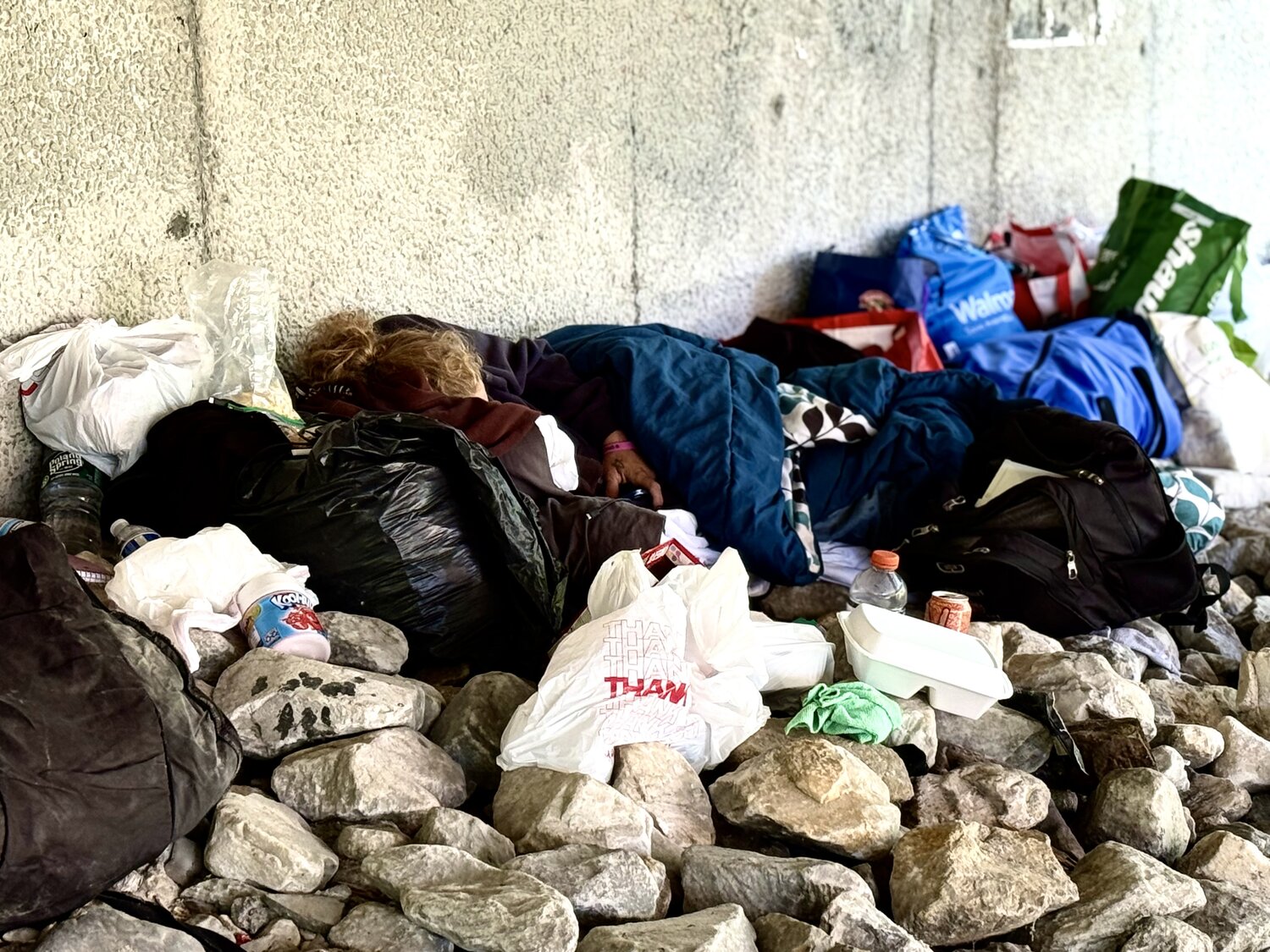
This is what it looks like when a community outsources the care of its most vulnerable neighbors to broken systems that the data show are not keeping up. Year after year, Vermont ranks near the top in homelessness. Year after year, the waitlists grow. Year after year, those of us with means give to nonprofits whose social media feeds show smiling staff, and we feel we have done our part. Then a town drops rocks under a bridge, and we call it complicated.
Kevin Adler and Donald Burnes diagnose the problem in their book When We Walk By. They describe homelessness in America as the product of twin crises: our social service systems are failing, and so is our humanity. Housing costs, low wages, gaps in health care, and the criminal justice system push people out of their homes. Isolation keeps them outside. Adler calls this relational poverty: the loss of the relationships that hold a life together. The book asks us to count “what we lose when we avert our gaze, walk on by, and choose comfort.”
That is the real complexity. Rents, wages, health care, and state policy are hard problems. The decision to make one patch of public ground unlivable is not. It has one input: people sleeping there. It has one output: no one sleeping there. When we call that decision complex, we borrow the difficulty of the whole problem to excuse a simple act. Complexity becomes a place to hide.
The town’s college
Middlebury College has a stake in this bridge. It pledged $9 million, more than half the cost of the $16 million Cross Street Bridge project. The town’s own historical marker recalls that the college’s founders called it the “town’s college.” The college’s Center for Community Engagement lists among its values “actions that honor the inherent worth and dignity of each person.”
Equity in practice means something specific. The needs of a community’s marginalized are not subordinated to the comfort of its privileged. Rocks under the college’s bridge do the opposite.
Middlebury College’s endowment exceeds $1.7 billion. Imagine how the lives of intersectionally impoverished neighbors would change if the town’s college invested even a small share of it upstream of life in an encampment:
- Housing people can afford
- Health and recovery care that meets people where they are
- Shelter in the county they call home
Moving closer
A policy solution of rocks and chain link signals how far away from each other we really are. The answer is not to walk by, but to connect and care. We do not need more balance. We need to recognize that a community of communities with a motto like “Freedom and Unity” does not stone the ground beneath its own people. A community that claims equity as a value lives into the idea that we cannot subordinate the needs of our marginalized neighbors to the comforts those of us with privilege enjoy.
So let’s move a little closer to each other. Smile, say hello, and learn your neighbors’ names. Stay long enough to learn some of their story, values, and needs, and carry them with you. Then bring what you learn back to your dinner table or council meeting.
Everyone who rested under the Cross Street Bridge is someone’s child. Jesus asked, “Is there anyone among you who, if your child asks for bread, will give a stone?” (Matthew 7:9, NRSV). Under that bridge, you can see Middlebury’s answer. It does not have to be the final one.
