


Labor, Connection, and Opportunity in America
Labor Day began as a protest.
On September 5, 1882, about ten thousand workers in New York City gave up a day’s pay to march from City Hall to Union Square. They were not celebrating. They were demanding an end to twelve-hour days, child labor, and wages that could not feed a family. Twelve years later Congress made the day a federal holiday in the middle of the Pullman strike. Six days after signing it, the president sent federal troops to crush that same strike. Dozens of workers were killed. The holiday was the gesture. The troops were the policy.
Here is what I have come to believe about that march. We are not honoring the labor. We are honoring what the laborers did with each other.
The people in that line were carpenters and cigar makers, printers and bricklayers, Irish and German, native-born and immigrant. They had every reason to stay in their own trades and their own wards and their own grievances. Instead they connected across those differences to accomplish a common good. That is the rare thing. Work is common. Suffering is common. People choosing each other over the tribe they were told to belong to is not. Labor gave them the occasion. Connection was the achievement.
It took them seventy years. The demand for an eight-hour day was first raised in the 1860s. Workers were shot at Haymarket in 1886 and at Pullman in 1894. Congress did not write it into law until 1938. Three generations marched, struck, went to jail, buried their dead, and kept organizing for a workweek most of us now treat as a law of nature. That is what strength looks like. Not a moment of outrage that burns out by the next news cycle, but people who expected to lose for a long time and showed up anyway, because they were accountable to each other and not to an audience.
The marchers were not saints. Most were skilled white tradesmen, and many of their unions barred Black workers, immigrants, and women from membership. The movement’s promise outran its practice, as every human movement does. Labor Day carries that lesson too. Everything we build is imperfect, including our best efforts at justice, and the work is never finished. What the marchers got right was the shape of the thing: people connected by experience and by values larger than themselves, insisting on dignity for everyone in the line and leaving it to the rest of us to widen the line.
What labor taught
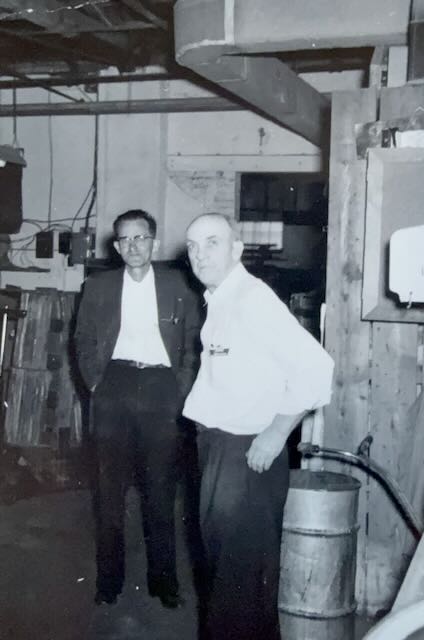
My grandfather Oscar had a third-grade education, two years in France during the First World War, and a lifetime cutting glass and silvering mirrors for Thomasville Furniture. His wife, my grandmother Mary, went to work in a hosiery mill at eight years old, beside her mother and older sisters. She never learned to read or write. Not because she lacked the ability, but because she never had the opportunity. I still have documents she signed with her mark, a simple X. My other grandfather, John, made paper boxes in Reidsville for decades and pulled tobacco on Tobacco Road at night for extra money, side by side with poor people of every color and creed.
I mention them not to claim a heritage. Stories about our people harden too easily into stories about who is not our people. I mention them because their lives show the same thing the marchers showed. The labor was hard. The connection was the point.
Their world sorted people by caste, race, creed, and ability, and it encouraged them to sort themselves the same way. They did not. Oscar and Mary raised three daughters in a two-bedroom, one-bath row house and took in an immigrant French family of three through the Depression. Nine people, no open bedrooms. Evenings and weekends they walked the mill neighborhood, porch to porch, with fried chicken, garden vegetables, or fresh-cut roses. The porches belonged to Black families, to families who spoke no English, to anyone the town had placed in another category. They even disagreed well. Mary loved the Red Sox. Oscar loved the Yankees. They argued about baseball more than politics, for decades, under the same roof.
None of this was a program. Nobody claimed it as “social justice.” It was what people did when hard labor and hard times had taught them that the neighbor across the line was worth the walk, and that nothing worth having gets built alone.
What we should have learned
The system they lived in was a human construction, and it sorted people. That is true. It is also true that the people at the bottom of that system built, out of their own labor and their own scarcity, a practice of connection across difference that the system never intended and could not stop.
America has kept the holiday and lost the practice. Labor is now something we honor from a distance, with a weekend and a sale, while the work itself moves out of sight into contracts, gigs, and supply chains. The people who milk the cows, wash the dishes, staff the shelters, and care for the elderly are the same people living closest to the edge. In 1974 nearly half of Americans spent a social evening with a neighbor several times a month. Now it is barely a quarter. Two-thirds say a good neighbor is one who does not get too involved. We live closer together and know each other less.
The dominant culture encourages this. It rewards the tribal impulse. It tells us that the people who look, vote, pray, or speak differently are either a threat or pitiful. It sells us insulated spaces of agreement and groupthink and calls them community. That is exploitation with better marketing. It depends on our not seeing each other, because people who see each other organize, and people who organize are hard to exploit.
What Labor Day asks of us
Three things.
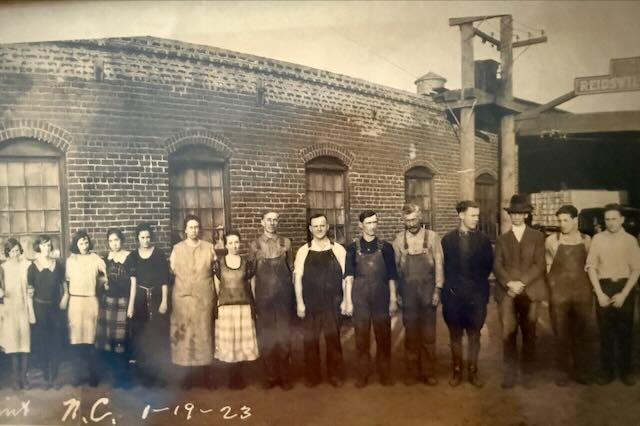
First, honor the people who labor. Not the idea of work. The people. The ones whose hands are rough, whose boots are muddy, and whose backs carry the weight, in Reidsville in 1923 and in Vermont today. Thomas Edison said, “Opportunity is missed by most people because it is dressed in overalls and looks like work.” He meant it as advice to the ambitious. Read it the other way. The people in the overalls are the opportunity. A community that cannot see them is missing its own best chance.
Second, refuse the norms of a culture built on exploitation and division, and refuse to let anyone appropriate the best of America’s promise. That promise is not written in a tax code. It is written on the Statue of Liberty: give me your tired, your poor, your huddled masses yearning to breathe free. The workers who marched in 1882 believed it applied to them. So did the French family under my grandparents’ roof. It applies to the farmworker, the dishwasher, and the person sleeping in a car outside the shelter tonight. It does not belong to those who would ask a stranger “are you like us?” rather than “what’s it like to be you?”
Third, mend the fabric. Get away from your screens and social comfort and go back outside. Walk down the street or the road and knock on a door you do not usually knock on. Bring a pie or a bushel of vegetables or flowers. Offer presence first and resources second. Meet a neighbor of difference, and find out what you hold in common underneath your identities and lifestances. That is what care, connection, and collaboration look like at the scale where they actually work.
The people who marched in 1882 knew something we have to relearn. Dignity is not granted by a system. It is made real by people who, against every encouragement to retreat into their own kind, connect across their differences to accomplish a common good. That was what the first Labor Day honored. It is still what is worth honoring.
Photographs: Reidsville Box Company, Reidsville, North Carolina, January 19, 1923. Thomasville Furniture plant floor, Thomasville, North Carolina, 1956.

